Shared track, stage 5
Building the outbound parcel: merge, split, pack
Goods in stock are not yet a shipment. This stage decides the box, the weight it bills at, and which lines will accept it.
Compare consolidation using the same goods and destination
Hypothetical plan: two clothing items and one boxed pair of shoes. Consolidation is a packing option, not a guaranteed saving. Compare complete, eligible quotes before choosing the box.
| Option | Ask the warehouse or estimator for |
|---|---|
| Keep all retail packaging together | Packed outer dimensions, scale weight, accepted route and total quote. |
| Remove an optional shoe box | Whether protection remains adequate and whether the billed weight actually changes. |
| Two parcels | The sum of both route charges and required packing; confirm each parcel’s contents are accepted. |
Use the freight rules to compare chargeable weight and restrictions. If the goods arrived through forwarding, retain the original seller order alongside the warehouse entry; a parcel quote does not resolve an item mismatch.
Free to merge, not always cheaper to ship
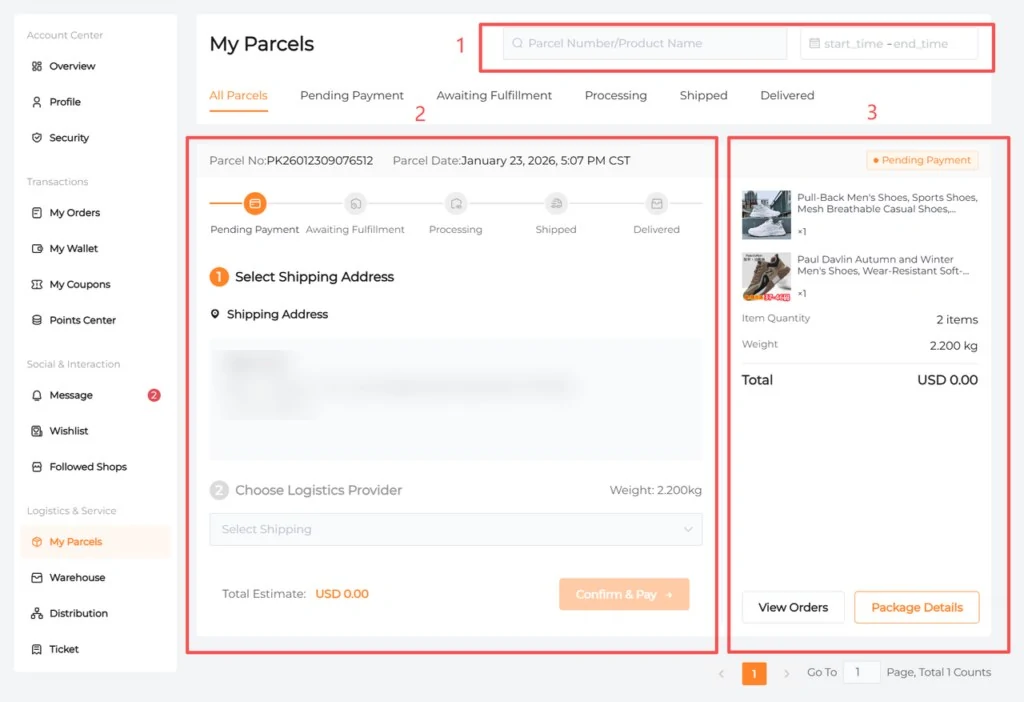
Once items are in stock you build a parcel from them in My Parcels. CNCartGo lists one-click consolidation, DIY consolidation, parcel splitting and a weight and size preview. Consolidation itself costs nothing. Whether it saves money depends on the box: two small items in one bag usually beat two parcels each paying a first-weight minimum, while a pair of boxed shoes added to soft clothing can push the whole parcel into size-based billing.
Combining only works before dispatch. The shipping policy is blunt: orders already shipped cannot be merged. Splitting is allowed too and is the right call when one item is restricted, fragile or headed for a different line. CNCartGo also warns that splitting does not guarantee lower duties.
Volumetric weight in practice
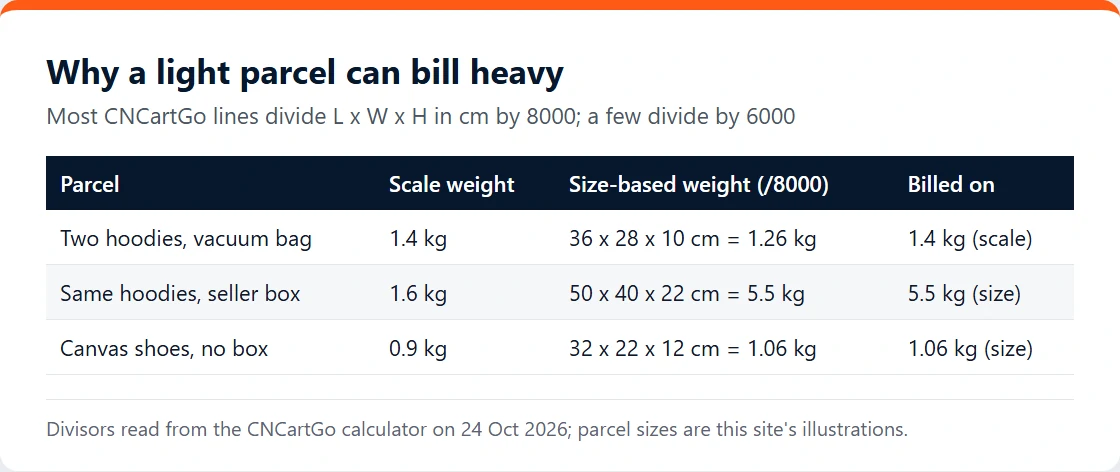
Most lines bill the higher of scale weight and size-based weight. The CNCartGo calculator shows the divisor for each line: on 24 October 2026 most used 8000 (multiply the three box edges in centimetres, then divide by 8000) and a few, such as the Australia dedicated lines and one electric line to Canada, used 6000. A lower divisor makes the same box bill heavier.
The practical lever is the box. CNCartGo can repack eligible goods and remove bulky seller packaging, but says this depends on product type and should not be used for fragile items without checking. Shoe boxes, plush toys, hats in rigid boxes and gift packaging are the usual culprits on their own volumetric guide.
What cannot share a box
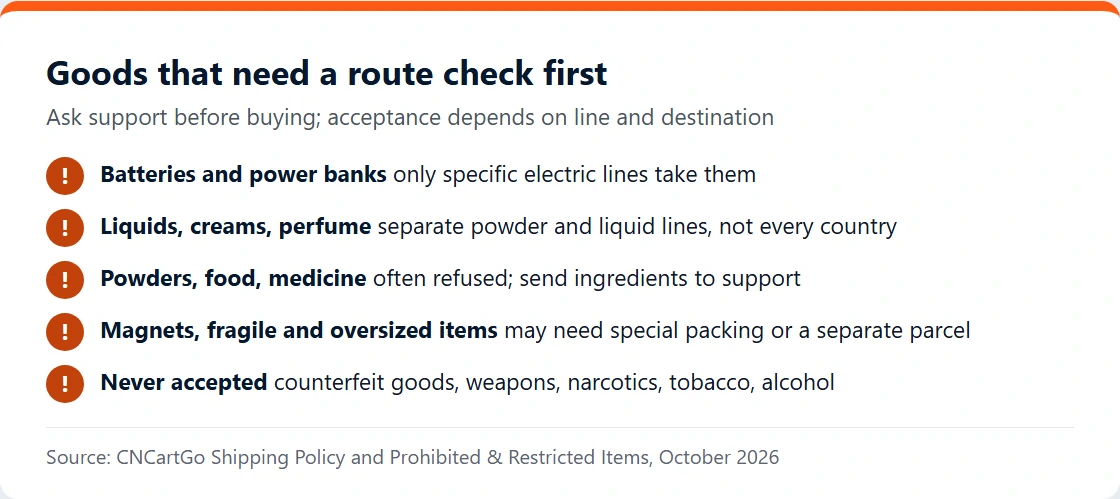
Restricted goods do not just need a different line; they often need a different parcel. Batteries and power banks travel only on electric lines, liquids and creams on powder-and-liquid lines, and both lists vary by country. The system blocks lines that are not eligible for what you selected, so one perfume in a parcel of T-shirts can remove the cheapest route for everything.
CNCartGo refuses counterfeit goods, weapons, narcotics, tobacco, alcohol and medicines outright, and its policy says small quantities or hiding an item among clothes do not make it eligible. For anything borderline, send support the link, the quantity and the destination before buying, not after it reaches Guangzhou.
The calculator's goods grid makes the rule concrete. For the Royal Mail line to the United Kingdom on our test day, clothing, shoes, bags, belts and glasses were accepted; watches were refused on that line, as were anything with internal electrics or magnets, liquids, food, medicines and most cosmetics. A watch therefore needed a different line, or a separate parcel, even though it weighs almost nothing. Check the grid for your own destination before you pack a mixed parcel.